
- Community Associations, Board Member 101
- Wisconsin, Indiana, Illinois, Florida
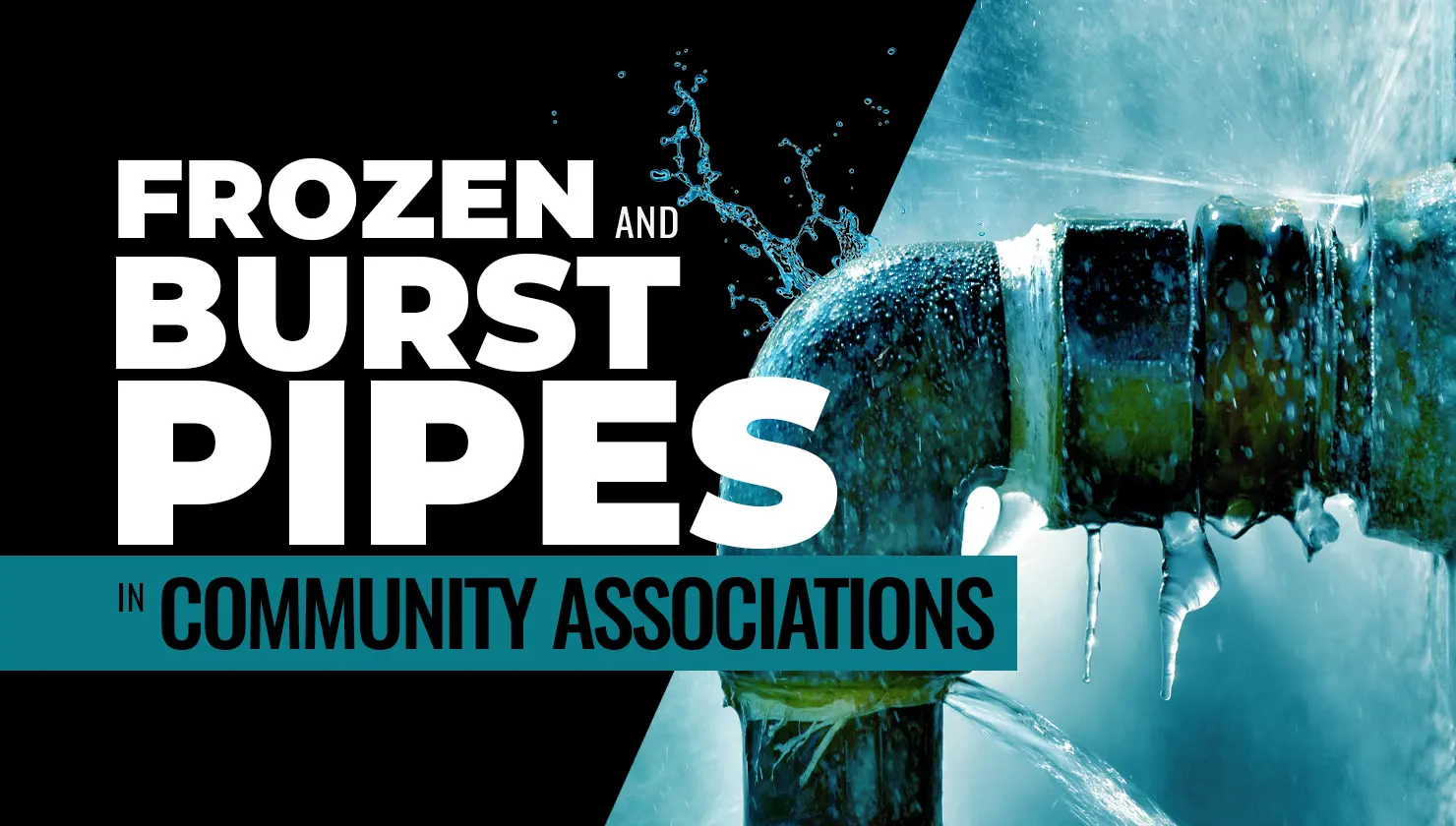
Frozen and burst pipes are among the most disruptive and costly issues condominium, homeowner (HOA), and townhome community associations face during cold weather. These incidents can result in significant property damage, insurance claims, and disputes over repair responsibility.
When pipes freeze or burst, the impact can extend beyond a single unit, affecting common elements, limited common elements, and neighboring residences. Water damage, mold concerns, and temporary displacement of residents may follow.
Below are several best practices for board members and property managers to understand how to respond promptly, determine responsibility, and plan proactively.
Five Best Practices for Boards and Property Managers
1. Respond Quickly and Identify the Source of Damage: The first priority is stopping the flow of water and mitigate further damage from burst pipes. Boards and community association managers should work with maintenance personnel or licensed professionals to locate the source of the burst pipe and assess the affected areas. The visible damage may not always be where the pipe failure occurred, making professional evaluation critical.
2. Determine the Area Served by the Pipe: It’s important to identify whether the damaged pipe serves a single unit or multiple units. Pipes may be classified as common elements or considered limited common elements, depending on the unit or units they serve and the association’s governing documents. This distinction plays a key role in determining repair responsibility.
3. Engage Qualified Professionals: Licensed plumbers, contractors, or engineers should be engaged to determine the cause of the pipe failure. Frozen pipes may result from extreme weather, lack of heat in a unit, appliance failures, or other conditions. Accurate documentation of the cause helps guide repairs, insurance decisions, and potential cost allocation.
4. Evaluate Insurance Coverage Before Repairs: When evaluating burst and frozen pipe repairs, boards should consider whether the damage is covered under the association’s insurance policies. Insurers often require documentation, inspections, and approval before work proceeds. Making permanent repairs prematurely may complicate or jeopardize coverage.
5. Educate Residents on Preventive Measures: While boards are not contractors, educating residents may reduce risk. Encouraging owners to maintain adequate heat, report leaks promptly, and follow cold-weather precautions help minimize damage caused by negligence or inattention.
Legal Considerations and the Role of the Association’s Attorney
Frozen pipe incidents frequently raise legal questions regarding responsibility, insurance coverage, and reimbursement. Governing documents (ex. declaration, bylaws) often determine whether the community association or the owner is responsible for repairs to pipes and resulting damage.
An experienced community association attorney can assist by:
- Interpreting governing documents to determine repair and cost responsibility
- Advising on whether damage involves common elements, limited common elements, or units
- Assisting with insurance claims and communication with insurance carriers
- Advising on chargebacks to owners when negligence is involved
- Helping boards avoid liability arising from delayed or improper repairs
- Reviewing policies and procedures to reduce future exposure
Legal guidance is particularly important when damage extends across multiple units, when negligence is alleged, or when disputes arise between owners and the association regarding responsibility.
Legal Resource
Frozen and burst pipes are a challenging reality for many community associations, especially during severe winter conditions. Prompt response, professional assessment, and careful coordination with insurance providers are essential to limiting damage and controlling costs. Just as important is understanding how governing documents allocate responsibility and ensuring decisions are made consistently and lawfully.
By adopting proactive maintenance practices, educating residents, and working closely with legal counsel, associations can reduce risk, respond effectively when incidents occur, and navigate the legal and operational complexities that follow. Prepared boards are better positioned to minimize disruption, avoid disputes, and protect association property.
Do not hesitate to contact KSN if you have questions about burst pipes, property damage, insurance claims, board member responsibilities, owner disputes, or other legal concerns.
Please contact our law firm by calling 855-537-0500 or visit www.ksnlaw.com.
Since 1983, KSN has been a legal resource for condominium, homeowner, and townhome associations. Additionally, we represent clients in real estate transactions, collections, landlord/tenant issues, and property tax appeals. We represent thousands of clients and community associations throughout the US with offices in several states including Florida, Illinois, Indiana, and Wisconsin.
Please note the material contained in this article is for educational and informational purposes only and does not constitute legal advice. No attorney-client relationship is established by your review or receipt of the information contained in this article. You should not act on the information discussed in this article without first obtaining legal advice from an attorney duly licensed to practice law in your State. While KSN has made every effort to include up-to-date information in this article, the law can change quickly. Accordingly, please understand that information discussed in this article may not yet reflect the most recent legal developments. Material is not guaranteed to be correct, complete, or up to date. KSN reserves the right to revise or update the information and statements of law discussed in the article at any time, without notice, and disclaims any liability for your use of information or statements of law discussed in the article, or the accessibility of the article generally. This article may be considered advertising in some jurisdictions under applicable law/s and/or ethical rules/regulations. © 2026 Kovitz Shifrin Nesbit, A Professional Corporation.