
- Community Associations
- Wisconsin, Indiana, Illinois, Florida
Condominium, homeowner (HOA), and townhome community associations are designed to manage and maintain property for the benefit of residents. But what happens when uninvited guests such as protected birds, turtles, or other wildlife take up residence on association property?
Understanding an association’s obligations when wildlife or endangered species are present is critical for avoiding legal violations, ensuring resident safety, and protecting the environment.
Wildlife Encounters in Community Settings
It’s not uncommon for community associations to share space with wildlife. Retention ponds attract waterfowl, golf courses draw migratory birds, and wooded or coastal areas may be home to protected species. Common examples include:
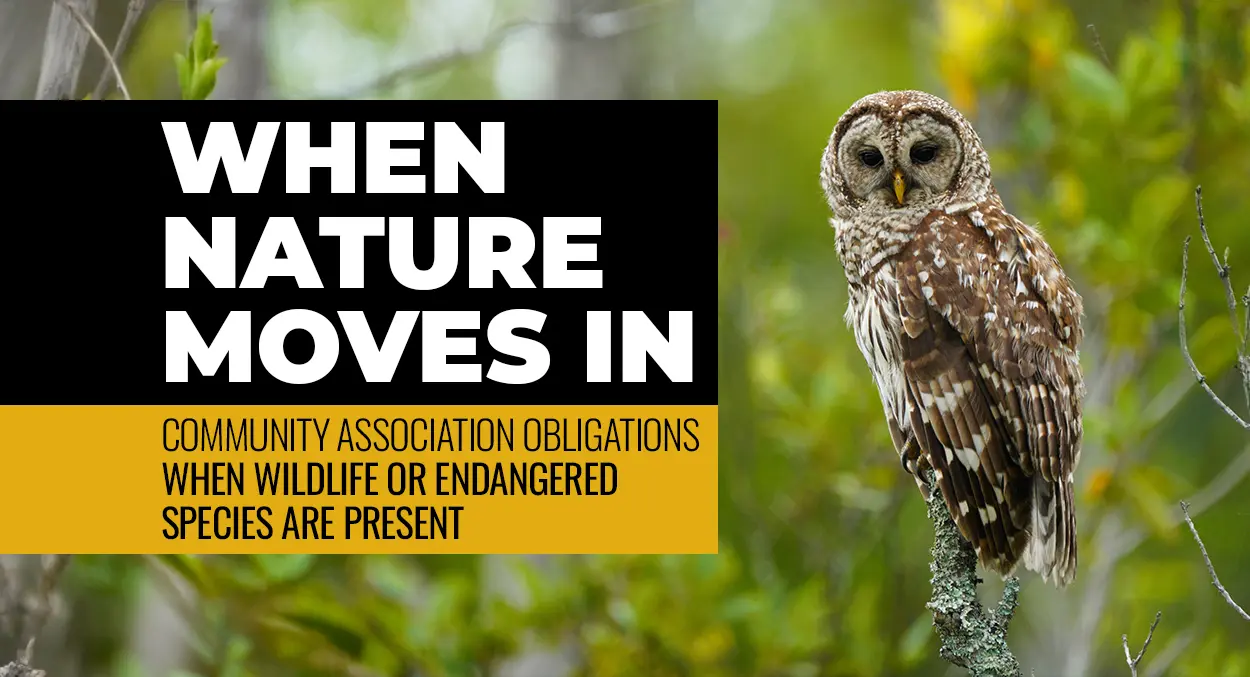
- Birds: Owls, herons, ospreys, or burrowing owls nesting in trees or on structures
- Turtles: Sea turtle nesting areas along beaches or ponds
- Mammals: Bats roosting in buildings or attics, or protected mammals in nearby habitats
- Reptiles: Snakes or alligators near water bodies in southern regions
These situations often arise unexpectedly, leaving boards and property managers unsure of how to respond.
Working with Qualified Experts
Associations should partner with licensed wildlife control specialists or environmental consultants experienced in protected-species compliance. These professionals can:
- Evaluate the situation and determine legal next steps.
- Coordinate with government agencies for required permits or relocation approvals.
- Recommend habitat-friendly solutions that align with community maintenance and landscaping goals.
Before hiring any vendor, the association’s attorney and insurance provider should review contracts to ensure proper indemnification, licensing, and liability coverage.
Legal and Environmental Obligations
When protected or endangered species are involved, the community association must proceed with caution. Federal and state laws such as the Endangered Species Act (ESA), Migratory Bird Treaty Act (MBTA), and various state wildlife protection laws prohibit disturbing, relocating, or harming certain species, even unintentionally.
Before taking any action, boards should:
- Contact appropriate authorities such as the U.S. Fish and Wildlife Service (USFWS), state environmental protection agency, or local animal control.
- Work with wildlife specialists to confirm species identification before removal or relocation as misidentification can lead to costly penalties.
- Document sightings and communications with wildlife professionals or government agencies.
- Suspend maintenance activities (ex. trimming trees, mowing, construction) in affected areas until clearance is provided.
Violating wildlife protection laws can result in substantial fines or criminal penalties, even if the association was unaware the species was protected.
Resident Communication and Safety
Board members and property managers should also prioritize clear and proactive communication with residents. They should notify residents of the situation and provide safety reminders such as keeping pets leashed and avoiding nesting or protected areas.
Installing signage or temporary barriers around affected zones can help reduce interference and protect both residents and wildlife. Additionally, boards should discourage residents from feeding wildlife as it can lead to dependence, aggressive behavior, and potential health risks.
Proactive communication not only promotes safety but also reassures residents that the board is managing the issue responsibly and in accordance with the law.
Legal Resource
Wildlife and community living often intersect and sometimes they overlap in unexpected ways. When endangered or protected species appear on community association property, a thoughtful and legally compliant response is essential.
By working with professionals, performing routine maintenance inspections, adapting landscaping policies, consulting experienced legal counsel, and maintaining open communication with residents, board members can balance environmental stewardship with their responsibility to protect association property and the people who live there.
Questions about working with association vendors, board member responsibilities, or other legal concerns?
Please call 855-537-0500 or visit www.ksnlaw.com.
Since 1983, KSN has been a legal resource for condominium, homeowner, and townhome associations. Additionally, we represent clients in real estate transactions, collections, landlord/tenant issues, and property tax appeals. We represent thousands of clients and community associations throughout the US with offices in several states including Florida, Illinois, Indiana, and Wisconsin.
Please note the material contained in this article is for educational and informational purposes only and does not constitute legal advice. No attorney-client relationship is established by your review or receipt of the information contained in this article. You should not act on the information discussed in this article without first obtaining legal advice from an attorney duly licensed to practice law in your State. While KSN has made every effort to include up-to-date information in this article, the law can change quickly. Accordingly, please understand that information discussed in this article may not yet reflect the most recent legal developments. Material is not guaranteed to be correct, complete, or up to date. KSN reserves the right to revise or update the information and statements of law discussed in the article law at any time, without notice, and disclaims any liability for your use of information or statements of law discussed in the article, or the accessibility of the article generally. This article may be considered advertising in some jurisdictions under applicable law/s and/or ethical rules/regulations. © 2026 Kovitz Shifrin Nesbit, A Professional Corporation.