
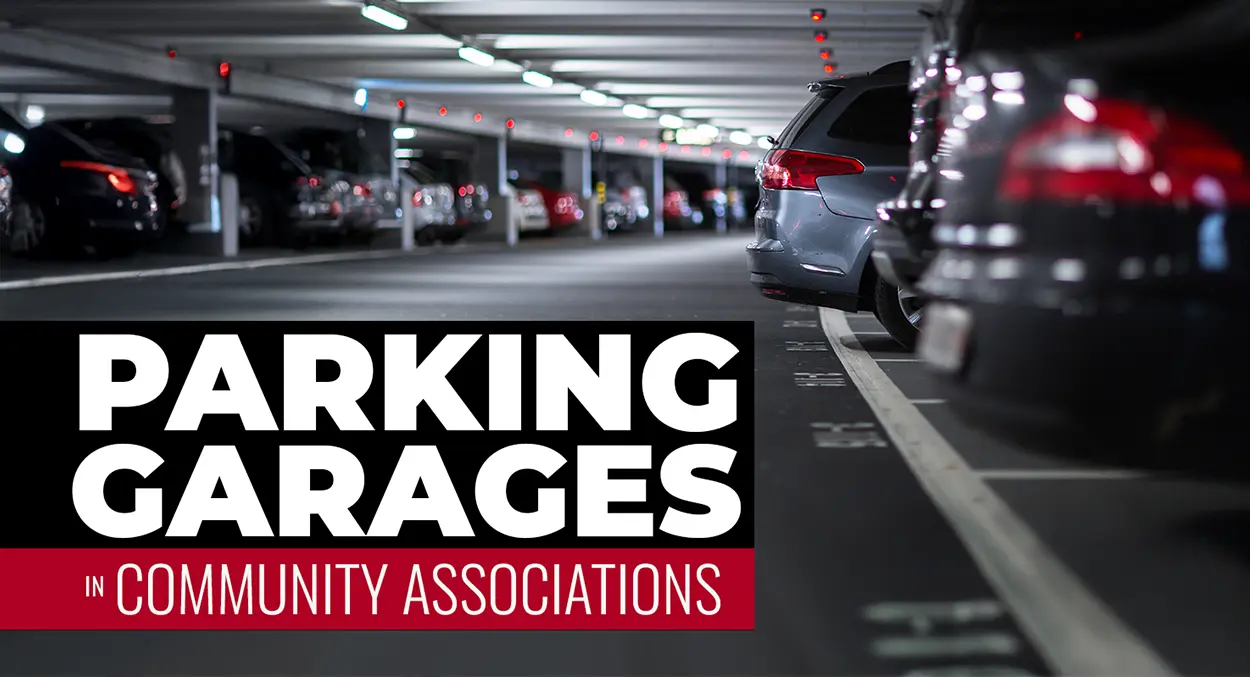
- Community Associations
- Wisconsin, Indiana, Illinois, Florida
Parking garages are an important but often complex element of managing a condominium, homeowner (HOA), or townhome community association. While many associations address traditional parking rules for surface lots and assigned spaces, those with parking garages must navigate additional responsibilities related to structural safety, accessibility, security, and insurance.
This article outlines important considerations for associations managing parking garages to ensure safety, compliance, and community satisfaction.
- Structural Safety and Maintenance
One of the primary concerns in parking garage management is ensuring the structural integrity of the facility. Regular inspections by licensed engineers are critical to identify wear and tear, corrosion, cracking, or water damage.
In addition to structural evaluations, associations should monitor waterproofing systems and drainage. Proper waterproofing and drainage can protect against long-term deterioration caused by water, salt, and chemical exposure commonly found in garages.
Along with structural safety, parking garage maintenance includes ensuring adequate lighting for both visibility and safety while also addressing ventilation to prevent the buildup of vehicle exhaust fumes.
- Security and Access Management
Controlling access to a parking garage is essential for resident safety and property protection. Community associations can install access control systems such as keycards, fobs, or license plate readers to prevent unauthorized entry and even deter criminal activity.
Surveillance systems such as security cameras can further deter theft and vandalism while providing valuable evidence in case of incidents. Associations should also install clear signage designating reserved spaces, no-parking zones, fire lanes, and emergency access routes to avoid confusion and disputes among owners.
- Insurance Coverage
Parking garages present unique liability and property risks. Associations should work closely with their insurance professionals to ensure the garage is properly covered under both property and liability insurance policies.
Property insurance typically covers physical damage to the garage while liability insurance provides protection against accidents such as vehicle collisions or slip-and-fall incidents within the structure. Associations should periodically review their coverage limits to confirm they align with the garage’s value and potential risks.
- Accessibility and Compliance Requirements
Parking garages must comply with various federal, state, and local accessibility standards including the Americans with Disabilities Act (ADA). This means ensuring an adequate number of properly designed accessible parking spaces including proper signage and dimensions.
Associations must also maintain clear emergency access routes for fire trucks, ambulances, and first responders. Fire lanes and emergency exits should be properly marked and kept unobstructed.
- Usage Rules and Deeded vs. Common Element Parking
Managing who can use parking spaces within the garage is another key responsibility. Associations must determine whether parking spaces are deeded to individual unit owners, specifically assigned, or considered common elements available on a first-come, first-served basis.
Deeded parking spaces may limit the board’s authority to reassign or regulate certain spaces while common element parking allows more flexible management. Regardless of the structure, associations should develop clear usage rules including towing policies for unauthorized or improperly parked vehicles. Accurate recordkeeping is also essential, especially for deeded spaces, to prevent disputes when units are sold or transferred.
- Financial Planning for Maintenance and Repairs
Parking garages require significant long-term financial planning. Community associations should include the garage in their reserve studies and allocate reserve funding for future maintenance, repairs, and eventual replacement projects.
In addition, associations must budget for ongoing vendor services such as cleaning, snow removal, and elevator maintenance (if applicable). It’s essential to have all vendor contracts reviewed by legal counsel to ensure the association’s interests are protected in case of service failures, damage, or liability issues.
- Legal Support for Parking Garage Management
Parking garages present complex operational and legal challenges. Board members, who serve as volunteers, are not expected to be structural engineers or insurance experts. That’s why it is important to work closely with a professional team including your association’s property management, reserve study specialists, insurance advisors, and legal counsel.
An experienced community association attorney can assist with:
- Drafting and updating parking rules and policies
- Advising on deeded space enforcement
- Reviewing insurance coverage requirements
- Overseeing vendor contracts
- Resolving owner disputes
- Ensuring compliance with federal, state, and local accessibility standards
Proactive legal guidance helps associations manage their parking garages responsibly while reducing risk and liability exposure.
Legal Resource
Thoughtful management of parking garages can protect resident safety, preserve property values, and ensure operational efficiency for community associations. By taking a planned approach to maintenance, security, accessibility, insurance, and legal compliance, associations can successfully manage one of their most important community assets.
Do not hesitate to contact our law firm if your association has questions about parking garage regulations, rule enforcement, drafting or updating association policies, or contract review.
Please call 855-537-0500 or visit www.ksnlaw.com.
Since 1983, KSN has been a legal resource for condominium, homeowner, and townhome associations. Additionally, we represent clients in real estate transactions, collections, landlord/tenant issues, and property tax appeals. We represent thousands of clients and community associations throughout the US with offices in several states including Florida, Illinois, Indiana, and Wisconsin.
Please note the material contained in this article is for educational and informational purposes only and does not constitute legal advice. No attorney-client relationship is established by your review or receipt of the information contained in this article. You should not act on the information discussed in this article without first obtaining legal advice from an attorney duly licensed to practice law in your State. While KSN has made every effort to include up-to-date information in this article, the law can change quickly. Accordingly, please understand that information discussed in this article may not yet reflect the most recent legal developments. Material is not guaranteed to be correct, complete, or up to date. KSN reserves the right to revise or update the information and statements of law discussed in the article law at any time, without notice, and disclaims any liability for your use of information or statements of law discussed on the article, or the accessibility of the article generally. This article may be considered advertising in some jurisdictions under applicable law/s and/or ethical rules/regulations. © 2026 Kovitz Shifrin Nesbit, A Professional Corporation.