
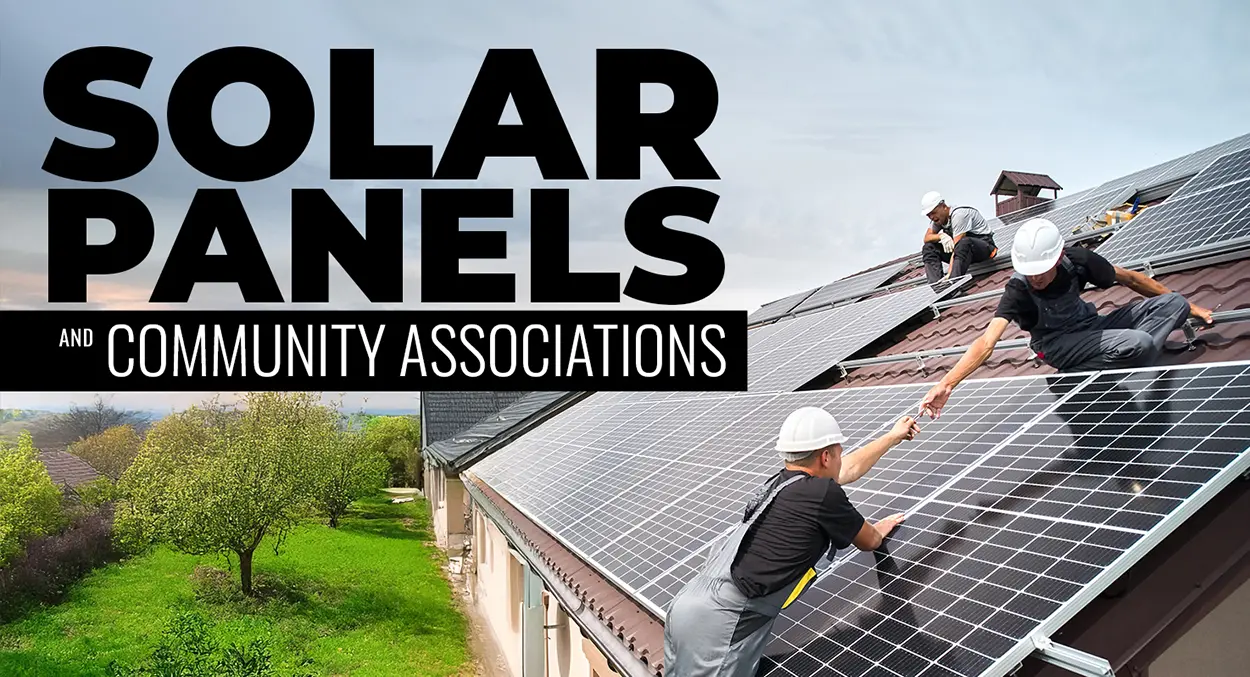
- Community Associations, Technology
- Wisconsin, Indiana, Illinois, Florida
As solar energy becomes more popular and accessible, many condominium, homeowner (HOA), and townhome associations are seeing an increase in homeowner requests to install solar panels. Solar technology offers attractive benefits like cost savings and environmental sustainability but it also brings unique challenges for community associations.
This article outlines key considerations for communities managing solar panel installations, including location issues, architectural standards, legal requirements, and best practices for association policy development.
Why Are More Homeowners Installing Solar Panels?
Homeowners cite several motivating factors when choosing to install solar panels, including:
- Cost savings: Solar energy can reduce or even eliminate monthly electric bills. Over time, the savings can be substantial, especially in regions with high utility costs.
- Environmental impact: As more residents aim to reduce their carbon footprint, solar panels offer a cleaner energy source that supports sustainability goals.
- Incentives: Federal and state governments, as well as some utility companies, offer tax credits, rebates, and other programs to help reduce installation costs.
These benefits have helped solar energy gain traction in community association across the country.
What Are Some Common Challenges Related to Solar Panels?
Despite the growing popularity of solar panels, their installation and maintenance raise several issues that associations must be prepared to address.
- Location and Visibility – Solar panels can be roof-mounted or ground-mounted. Each option raises different concerns. Roof installations are often highly visible, particularly on corner lots or homes on side streets. Ground-mounted systems may interfere with landscaping, fencing, or open space.
Associations should be prepared to address visibility standards in their architectural guidelines and how installations may affect the overall aesthetic of the community.
- Architectural Standards – Just like exterior paint colors or roofing materials, solar panels are subject to architectural guidelines. Community associations should review or develop architectural policies that address:
- Panel materials, thickness, and color
- Mounting system compatibility
- Installation orientation and placement
- Impact on visual uniformity
Incorporating solar-related standards into architectural review processes can help avoid disputes and ensure consistency with community design.
- Structural and Safety Concerns – While board members are not expected to be construction or electrical experts, they must still work with owners to ensure installations are safe and compliant. Solar panel systems must be compatible with existing roofing and electrical systems as improper installations can lead to costly damage or even safety hazards. Considerations can include:
- Building permits and contractor licensing verification
- Proof of insurance from installation vendors
- Review of system specifications for compatibility with shared or adjacent structures
These precautions help minimize liability while supporting responsible energy upgrades.
Does Your Association Need a Solar Panel Policy?
A formal solar panel policy ensures that all homeowners are held to consistent standards while protecting the community association’s legal and financial interests. A well-drafted policy can clarify expectations, outline the approval process, and reduce the risk of owner disputes. Here are three key elements to consider when drafting a solar panel policy.
Define Maintenance Responsibilities – The policy should clearly define the homeowner’s obligation to maintain their system. This may include preventing panel deterioration, cracking, or discoloration. Responsibilities may also include promptly repairing any damage caused to common areas (ex. walkways, bike paths). Assigning responsibility in writing helps protect the association from being held liable for maintenance or repair issues.
Conduct a Legal Compliance Review – States have different laws regarding solar access and homeowner rights. A solar panel policy must comply with current state and local laws while reflecting any applicable federal guidelines. Board members, property managers, and community leaders should consult their association’s legal counsel to ensure policies comply with evolving legislation and do not infringe on protected homeowner rights.
Outline Clear Approval Processes – A standardized process for requesting solar panel approval can promote fairness and consistency. This process should include required documentation (ex. contractor plans, permits) and submission timelines. Approval criteria and instructions for appeals or resubmissions will also reduce confusion and potential conflict. When owners know what to expect, they are more likely to comply with requirements and timelines.
Legal Resource
As solar panel technology continues to evolve, community associations that plan ahead and regularly update their policies will be better equipped to adapt. Having a clear solar panel policy allows boards to support homeowner energy goals while safeguarding the long-term appearance, functionality, and legal standing of the community.
Whether you’re responding to a single request or updating outdated architectural guidelines, consulting with an experienced community association attorney can help your board create a legally sound, enforceable, and community-friendly solar panel policy.
Questions about drafting or updating your solar panel policy, revising architectural guidelines, or complying with solar access laws? Do not hesitate to call 855-537-0500 or visit www.ksnlaw.com.
Since 1983, KSN has been a legal resource for condominium, homeowner, and townhome associations. Additionally, we represent clients in real estate transactions, collections, landlord/tenant issues, and property tax appeals. We represent thousands of clients and community associations throughout the US with offices in several states including Florida, Illinois, Indiana, and Wisconsin.
Please note the material contained in this article is for educational and informational purposes only and does not constitute legal advice. No attorney-client relationship is established by your review or receipt of the information contained in this article. You should not act on the information discussed in this article without first obtaining legal advice from an attorney duly licensed to practice law in your State. While KSN has made every effort to include up-to-date information in this article, the law can change quickly. Accordingly, please understand that the information discussed in this article may not yet reflect the most recent legal developments. Material is not guaranteed to be correct, complete, or up to date. KSN reserves the right to revise or update the information and statements of law discussed in the article, law at any time, without notice, and disclaims any liability for your use of information or statements of law discussed on the article, or the accessibility of the article generally. This article may be considered advertising in some jurisdictions under applicable law/s and/or ethical rules/regulations. © 2026 Kovitz Shifrin Nesbit, A Professional Corporation.